31 July 2024

August Activity Details: Friday, 2 August 2024 and Sunday, 04th August, bus trip to Nudgee Beach and Boondall wetlands

CLUB MEETING: Friday, 02nd  August, 7 pm - St. Anthony’s Community Centre, Memory Street, Toowoomba.

Threatened Flora and Vegetation Communities of the Darling Downs with Will Gibson

Will Gibson
Will is a locally based ecologist and environmental planner with a range of experience working for Councils and private environmental consultancies across Southern Queensland. Will leads a team of ecologists based in Toowoomba at Range Environmental Consultants and is passionate about balancing the needs of the environment we live in, conservation and the pressures of modern society. 

Since moving to Toowoomba in early 2021 Will has become a passionate advocate for the conservation, protection and management of the region's threatened plant and vegetation communities. Will's talk will provide an overview of the variety of flora species which have faced threatening processes across the region and how ecologists like himself manage these pressures and work to ensure their conservation with some local examples included. Will's talk will also discuss the value of citizen science and the important role that clubs like TFNC play in supporting knowledge of flora and fauna species distribution.


CLUB OUTING: Sunday 04th August, bus trip to Nudgee beach and Boondall wetlands
The bus is fully booked. Commiserations if you missed out.

23 June 2024

Nature Journaling Workshops


Sat 31 Aug 2024

‘Nature journaling for teachers’ workshop.

This is a workshop for anyone who would like to teach nature journaling, including but not limited to teachers. 5 hours duration, plus 1 hour break for lunch. Includes some art materials, a morning tea and light lunch provided by TFNC.


Sun 1st September 2024
‘Introduction to Nature Journaling’ workshop.

For ages 15 years and over (interested kids 10 years and over are welcome if accompanied by an adult). 3 hours duration, plus morning tea break. Includes some art materials and morning tea provided by TFNC.


The Toowoomba Field Naturalist Club is hosting a project called "Wild About My Garden", in collaboration with Toowoomba Gardens for Wildlife (G4W). We are inviting contributions from the public which convey a special moment with nature, either as photography, nature journaling, poetry and prose, or works of art. For more information click here.

About the Presenter:

Paula Peeters has a PhD in ecology, and spent 13 years working for state government environmental agencies. During this time, she realised that facts alone were not enough to change the way people thought about conservation and environmental protection. In an effort to engage more people in protecting the environment, Paula took a year of leave in 2015. She spent the year writing, making art and blogging. The year of leave turned into forever, and Paperbark Writer was born. 

About the workshops: 

Nature journaling is the practice of drawing or writing in response to observations of nature. The practice slows you down, increases your mindfulness (or clears your mind), and increases your attention to detail and appreciation of beauty. It helps you to notice the details in nature, and improves your recognition of different species, and your understanding of where and how they live. With time, it also improves your ability to observe, to draw and to write. Spending quiet time in nature has many wellness benefits, and nature journaling is a practice that encourages this ‘quiet time’ and reflection.

07 June 2024

The Joan Kolbe Project, 'Wild About My Garden'

The Joan Kolbe Project,

Wild About My Garden

The Toowoomba Field Naturalist Club Inc. is inviting community members of all ages and interests to share a special moment with nature, either through photography, a nature journal page, poetry or prose or a work of art. 

Hosted by the Toowoomba Field Naturalist Club Inc. (TFNC), this project is supported by a donation from the family of Joan Kolbe, a former member of TFNC. 

Joan Kolbe 


The club is honouring Joan’s legacy through this project.

For more information about the project, click here.

Aims of the project:

• To focus attention on gardens that provide a safe and welcoming habitat for wildlife.
• To create an event that invites people of all ages and interests to connect with nature.
• To highlight the activities of Toowoomba Field Naturalist Club Inc. and other environmental groups within the Toowoomba Regional Council region, including Gardens for Wildlife Toowoomba Region (G4W) and other groups supported by the Darling Downs Environment Council (DDEC).

How to Become Involved

Enter artwork and/or writing to be eligible for inclusion in an eBook and/or an exhibition of work to commemorate the project.

Watch Costa's video about the project.

Categories of Artwork and Writing:  

• Photography
• Nature Journal page
• Poetry or Prose
• Work of Art

Age Levels:
Under 16 
Open (16 and over)

Entries open:
25th August to 22nd September, 2024
An Honorary Award will be presented in each category and in both age levels.
All contributors will receive a certificate of participation as a downloadable PDF.

Entries will be displayed at:
DDEC Eco Hut,
1A Heller St., Toowoomba
on Saturday 28 September from 2pm – 5pm.

Rules for Contributions

• Anyone can enter free of charge but ALL entries must pertain to the Toowoomba Regional Council region.
• All entries must be the original work of the entrant.
• Entries should convey a personal connection with the chosen topic, gained through time spent with some aspect of nature found in your chosen space. 
• All entries must be digital, as a .pdf or a .jpg or a Word document, and no larger than 5 mb.
• Each entry is to be submitted separately as an attachment to an email to: tfncwildaboutmygarden@gmail.com. Before attaching an entry, the image must be saved with your name and age category. e.g., Jemma Lawson U16.  (Any images incorrectly identified will be returned for editing.) Your accompanying email must include your name, contact details, entry title and category. 
• Total number of entries per person is three (3) e.g. one in each of three categories OR any other combination.
• Poetry and/or prose must be a maximum of 300 words.
• Written works may include an original hand-drawn illustration on the page.
• The entrant agrees that entries can be used by TFNC for educational or promotional purposes including on the TFNC’s web site, Facebook page, Newsletter and in an eBook, and may also be shown on other platforms. The entrant will always be acknowledged where the image is used.

Other Information

• Entry is FREE 
• By submitting an entry, you are confirming that you have read the rules of entry and the following information.
• There is no restriction on the size of the garden space, and includes private gardens, community gardens, parks, school grounds etc.
• Images may include man-made items including frog ponds, nest boxes etc.
• Topics and titles are the entrant’s own choice, in keeping with the theme: Wild About My Garden.
• Copyright and intellectual property remains with the entrant and no commercial use of entries will be made without their prior consent.
• The TFNC organizing committee’s decisions are final.


Other Activities

  •      A Paula Peeters workshop on nature journaling. 
  •      A nature photography workshop with James Sparshott. 
  •      Specialist talks by published naturalists are also planned.
For more information on nature journaling, we recommend the following link: paperbark writer - nature journaling.
For more information on Gardens for Wildlife Toowoomba Region (G4W) please follow the link: g4w Toowoomba Region 
Keep an eye out for workshops, talks, etc. throughout July, August & September that will contribute to Wild About My Garden on our Facebook page.

If you have further questions, please contact tfncwildaboutmygarden@gmail.com

29 May 2024

May Outing Report - Ravensbourne, 05 May 2024

Adapted from the Toowoomba Field Naturalist Club newsletter, Issue 796, June 2024
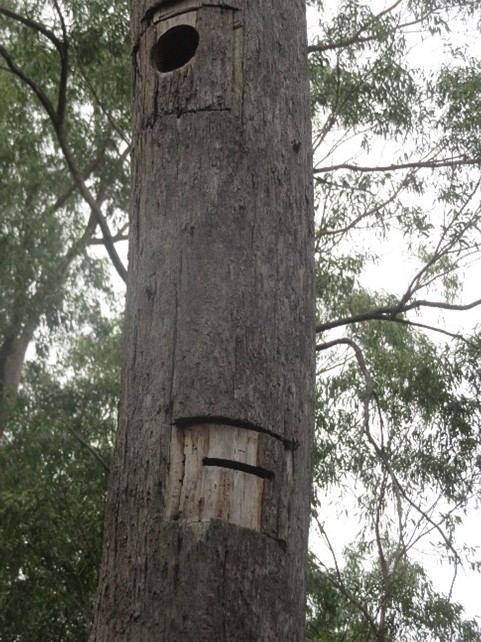
artificial nesting hollows
in situ
Photo: F. Mangubhai

Sunday’s outing turned out to be fine day as members made their way to the Ravensbourne property of 40 hectares surrounded by gardens and beyond that a wet sclerophyll forest. Our first walk was along a track that led through the forest where hollows for birds and bats were made using a chainsaw, the round one for, hopefully, a glider, while the slit was for microbats. Amongst the trees in the forest was Sydney Blue Gum Eucalyptus saligna, Brush Box Lophostemon confertus and stringy barks. A Moreton Bay Fig Ficus macrophylla, likely propagated from bird droppings, showed all the signs of turning into a magnificent, shade-giving tree.

An artist was at work in the forest; we came across a Sydney Blue Gum with designs on its trunk. The artist was the Red Triangle Slug Triboniophorus graeffei. Also, on this walk we saw a dragonfly, the Australian Emperor Anax papuensis, which looked to be petrified by us as it stayed perched on a leaf for all our photographers who approached it. 

Red Triangle Slug
Triboniophorus
graeffei

Photo: R. Hobson

Red Triangle Slug trails
Photo.: F. Mangubhai
   
Australian Emperor
Photo: J. Gundry


After morning tea, members walked around the extensive gardens.

Lunchtime was spent chatting about what had been seen, and a species list compiled. We also learned why there was no vegetable garden currently, as the Pale Field Rats Rattus tunneyi, Black Rats R. rattus, Bush Rats R. fuscipes, and two local bandicoot species had managed to burrow under the fence and eat anything that was growing. Rather than fighting them with poison, they’d opted to cease planting vegetables.

Thank you to our hosts, for sharing your home with us and making it such a wonderful day for the Field Nats members. Thanks to everyone who contributed to the species list below, as well.

Usnea sp. (a beard lichen)
Photo: G. Spearritt
Horehound Bug 
Agonoscelis rutila 
on salvia
Photo: G. Walter 
Golden Mistletoe
Notothixos subaureus
on Box Mistletoe
Amyema miquelii 
Photo: G. Spearritt

Click on images to enlarge.   
 
Species Lists: Mammals: Red-necked Wallaby, Red Deer* Birds: Pheasant Coucal, Shining Bronze-Cuckoo, Wedge-tailed Eagle, Laughing Kookaburra, Galah, Australian King-Parrot, Crimson Rosella (nom. subsp.), Satin Bowerbird, White-throated Treecreeper (southern), Variegated Fairy-wren, Brown Honeyeater, Blue-faced Honeyeater, White-naped Honeyeater, Eastern Spinebill, Lewin’s Honeyeater, Noisy Miner, Striated Pardalote, Weebill, White-browed Scrubwren, Black-faced Cuckoo-shrike, Rufous Whistler, Golden Whistler (south-eastern Australia), Eastern Whipbird, Pied Currawong (eastern Australia), Australian Magpie, Grey Butcherbird, Grey Fantail, Torresian Crow, Eastern Yellow Robin, Red-browed Finch, Welcome Swallow, Silvereye (eastern); also, of interest, a male Common Blackbird seen on the side of the Esk Hampton Road just below its junction with the New England Highway, Hampton on the way to the outing. Reptiles: Dark-flecked Garden Sunskink Lampropholis delicata, Eastern Small-eyed Snake Cryptophis nigrescens** Flatworms: Blue Garden Flatworm Caenoplana coerulea Molluscs: Red-triangle Slug Triboniophorus graeffei Spiders: Golden Orb-weaver Trichonephila plumipes, Silver Orb Spider Leucauge granulata Dragonflies: Australian Emperor Anax papuensis Cockroaches: Common Trilobite Cockroach Laxta granicollis Grasshoppers: Hedge Grasshopper Valanga irregularis Sucking Bugs: a water strider Tenagogerris euphrosyne, Horehound Bug Agonoscelis rutila*** Butterflies: Narrow-brand Grass-dart Ocybadistes flavovittatus vittatus, Pink Grass-yellow Eurema herlia, Large Grass-yellow Eurema hecabe, Monarch Danaus plexippus, Glasswing Acraea andromacha andromacha, Tailed Emperor Charaxes sempronius sempronius, Evening Brown Melanitis leda bankia, Brown Ringlet Hypocysta metirius Ants: Jumper Ant Myrmecia nigrocincta, a spiny ant Polyrhachis brisbanensis, a spider ant Leptomyrmex cnemidatus, a spider ant Leptomyrmex tibialis Fungi: Redlead Roundhead Leratiomyces ceres, Southern Cinnabar Polypore Pycnoporus coccineus, Turkey Tail Trametes versicolor. 

* several trees used as stag rubbing posts observed
** pair found under sheet of tin later in day
*** found on ornamental salvia; 34 x colour varieties represented in garden (owner's personal comment), but bug restricted to blue-coloured variety (observer's pers. obs.)  

02 May 2024

May Activity Details: Meeting - 3 May 2024. Outing - 5 May 2024

Meeting, 3 May 2024

Justine Rice of Lockyer Uplands Catchments Inc. As LUCI's project coordinator, Justine manages two conservation projects, one being Bunyas to Border, which is part of the Great Eastern Ranges (GER) and International Fund for Animal Welfare (IFAW) Koala Climate Corridors project.  It involves LUCI working with local partners to enhance the critical koala habitat corridor in the western ‘horn’ of the Greater Border Ranges, which covers the landscape from Main Range, Helidon Hills and the Bunyas; an important movement pathway for wildlife and an area rich in many threatened native animals and plants. 

Photo: from Centre for Biodiversity and Conservation Science, University of Queensland website

Outing, 5 May 2024

Private property in Ravensbourne. On arrival there will be a talk on the work that has been undertaken and future plans. Following morning tea we will visit the small eucalypt forests.
In the afternoon we can wander in the gardens or watch a show of wildlife photos to those who prefer to have a rest.
Bring a chair, morning tea, lunch, water, hat and an enquiring mind. 
For directions: Members see your May newsletter. Non-members, please contact us at toowoombafieldnaturalists@gmail.com for details.

01 May 2024

April Outing Report - Aubigny, 07 April 2024

 Adapted from the newsletter "The Darling Downs NATURALIST"

A Brown Songlark’s sweet soliloquy high over our assembly was a good augury, with the croaking of a gutter of Spotted Grassfrogs nearby providing a nice counterpoint. Patches of blue overhead lifted the mood on a dubious wet day.

En route to our destination we tarried awhile at Nev Bidgood Grove, a pleasant little bit of parkland along the Oakey Pittsworth Road at its junction with Brennan Road, Aubigny. Bird life was in fine fettle here and it was good to see a small charm of Zebra Finch dipping to safety in an African Boxthorn Lycium ferocissimum. These lovely little birds are on the decline in our neighbourhood and the flocks encountered these days are miniscule compared to those of my childhood in the 1950s. 

Over smoko we were given an overview of the property. Considering that these four hectares were only acquired in 1998 as an unimproved bush block, today it is a beautifully landscaped arboretum and nature refuge. The house was built in 1999 and initially the owners used to run horses. The last horse passed on in 2015 and in the intervening years the property has been transformed into the showpiece it is today. It has now become a regular haunt for Toowoomba-based botanists and birdwatchers in particular.

On our visit members dispersed to all points to pursue their various interests. We collected a good list of fauna for our troubles especially of birds. The property hosts a rich representation of the avifauna of the grasslands and Coolabah country of the eastern Darling Downs.  


It was a great day out with wonderful hosts, and good fellowship. It is always good to hear Grey-crowned Babblers and watch Double-bars, Zebra Finches and Superb Fairy-wrens over lunch.  And a large, foraging Striped Ctenotus glistening in its new skin.  

Species Lists

Earthstar Fungi
Assembly area, near corner of Warrego Highway and Oakey Pittsworth Road, Oakey: 
Birds: Zebra Finch, Brown Songlark Frogs: Spotted Grassfrog Limnodynastes tasmaniensisNev Bidgood Grove and Brennan Road, Tangkam: Birds: Brown Quail, Spotted Dove, Crested Pigeon, White-faced Heron, Straw-necked Ibis, Black-shouldered Kite, Galah, Pale-headed Rosella (southern form), Striped Honeyeater, Noisy Miner, Spiny-cheeked Honeyeater, Striated Pardalote, Yellow-rumped Thornbill, Grey-crowned Babbler (eastern), Black-faced Cuckoo-shrike, Pied Currawong (eastern Australia), Australian Magpie, Grey Butcherbird, Willie Wagtail (southern), Torresian Crow, Magpie-lark, Mistletoebird, Zebra Finch, Double-barred Finch, Common Myna Butterflies and Moths: Scarlet Jezebel Delias argenthona argenthona, Varied Eggfly Hypolimnas bolina nerina, Meadow Argus Junonia villida villida, Orchard Swallowtail (Australian subspecies) Papilio aegeus aegeus Bees, Wasps and Ants: Banded Sugar Ant Camponotus consobrinus, Southern Meat Ant Iridomyrmex purpureus, an ant Calomyrmex sp., Green-head Ant Rhytidoponera metallica Fungi: an earthstar Geastrum saccatum (a second earthstar also seen but not able to identify to species level). 

Aubigny property: Mammals: Red-necked Wallaby, European Brown Hare: Birds: Brown Quail, Spotted Dove, Black-shouldered Kite, Nankeen Kestrel, Galah, Red-rumped Parrot, Pale-headed Rosella (southern form), Scaly-breasted Lorikeet, Superb Fairy-wren, Striped Honeyeater, Brown Honeyeater, Noisy Miner, Striated Pardalote, White-throated Gerygone, Grey-crowned Babbler (eastern), Black-faced Cuckoo-shrike, Pied Currawong (eastern Australia), Australian Magpie, Pied Butcherbird, Grey Butcherbird, Willie Wagtail (southern), Torresian Crow, White-winged Chough, Apostlebird, Zebra Finch, Double-barred Finch, Tree Martin, Common  Myna. Reptiles(lizards): Straight-browed Ctenotus Ctenotus spaldingiFrogs: Spotted Grassfrog Limnodynastes tasmaniensis, Common Green Treefrog Litoria caerulea Spiders: Dew Drop Spider Argyrodes antipodianus, Black House Spider Badumna insignis, Tent Spider Cryptophora moluccensis, Golden Orb-weaver Trichonephila edulis Dragonflies and Damselflies: Aurora Bluetail Ischnura aurora, Australian Emperor Anax papuensis, Australian Emerald Hemicordulia australiae, Tau Emerald Hemicordulia tau, Scarlet Percher Diplacodes haematodes, Wandering Percher Diplacodes bipunctata, Blue Skimmer Orthetrum caledonicum Butterflies and Moths: Caper White Belenois java teutonia, Lemon Migrant Catopsilia pomona, Tailed Emperor Charaxes sempronius sempronius, Lesser Wanderer Danaus petilia, Small Grass Yellow Eurema smilax, Meadow Argus Junonia villida villida, Orchard Swallowtail (Australian subspecies) Papilio aegeus aegeus Bees, Wasps and Ants: Southern Meat Ant Iridomyrmex purpureus, Stick-nest Brown Paper Wasp Ropalidia revolutionalis Fungi: a puffball Calvatia lilacina.

*Taxonomy in dispute, also called Ctenotus robustus (Robust Ctenotus, Striped Ctenotus)

01 September 2023

September Activity Details: Outing; Crows Nest - Sunday 03 September 2023


Doesn't she look sweet, but she's a killer!
CLUB MEETING: Friday 01 September 2023    

Dr Meg Edwards is a Lecturer in Wildlife Science at the University of Southern Queensland. She completed her  PhD in Queensland investigating innovative techniques to help counteract the effects of introduced predators. Her current research focuses on threatened species conservation. Meg’s talk will detail her research into native mammalian wildlife and how they react to introduced predators such as cats and foxes.

CLUB OUTING: Sunday 03 September 2023 - Crows Nest. 

Time: 8.30 am. If you're not a Toowoomba Field Naturalists Club member, please let us know you're coming,  toowoombafieldnaturalists@gmail.com, in case there are last minute changes.
The tracks
for the first part of the day

Where: Crows Nest in the car park beside the swimming pool.

Description: Take a walk through  open woodland, on private property,  to see a variety of eucalypt trees from gums to stringybarks, bloodwoods and ironbarks, plus acacias and small shrubs, many in flower. Move on to Hartmann Park, William Street, Crows Nest for a choice of walks and wildflower displays. Lunch will be at the picnic area below William Street.

Level of Fitness: Slashed tracks will make for easy walking. 

Facilities: Toilets and picnic tables at Hartmann Park. However we may gather away from the tables so it is advised you bring your own chairs.

What to Bring: suitable clothing and footwear for walking in the bush, 
water, morning tea, lunch, a chair, a friend and an enquiring mind.

Trigger plants last month

Banksias
were in flower last month